


Blog
How to Change the Oil in a Push Mower’s Engine


Similar to your car, your lawn mower and other small engine equipment need routine oil changes. Through time and use, your equipment’s oil becomes dirty and loses its protective elements. Regular oil changes are vital in maintaining your equipment’s longevity and preventing costly repairs. Keep reading to learn how often you should change the oil in your mower, what items you’ll need, and the steps to take for an easy, fast oil change.
How Often Should You Change the Oil in a Push Mower?
You’ll need to change the oil in your push mower at least once a year. For push mowers that get frequent use, you’ll need to do this more than once a year. For example, many push mowers need an oil change every 50 hours of use. In these cases, make sure you check your engine or mower’s operating manual to know how often an oil change is needed for your specific model.
What You’ll Need
To keep the process simple and prevent interruptions, ensure you have all the necessary items before you start.
- Lawn Mower Engine Oil
- Oil Extractor Kit or Oil Drain Pan
- Paper Towels/Old Rags
- Engine and/or Mower Operating Manual(s)
- (Optional) Funnel
To find out what type of oil your small engine needs, you can check your engine or mower’s operating manual. Car motor oil should never be used in your small engine. For health and safety reasons, the space you work in should be well ventilated, and your mower should not be hot to the touch. If you recently used your mower, let it cool down before continuing with maintenance so you don’t burn yourself.
Draining the Old Oil
There are two common ways to drain the oil in your push mower’s engine. We’ll cover both methods below. The first and easiest method is to use an oil extractor kit. This method doesn’t require you to elevate or tilt your mower, making the entire process much faster and safer. You also won’t need to use a drain pan since these kits come with attached tanks. The second method requires a drain pan and tilting or propping up your mower to drain the oil with gravity. This method involves extra work, time, and potential spills.
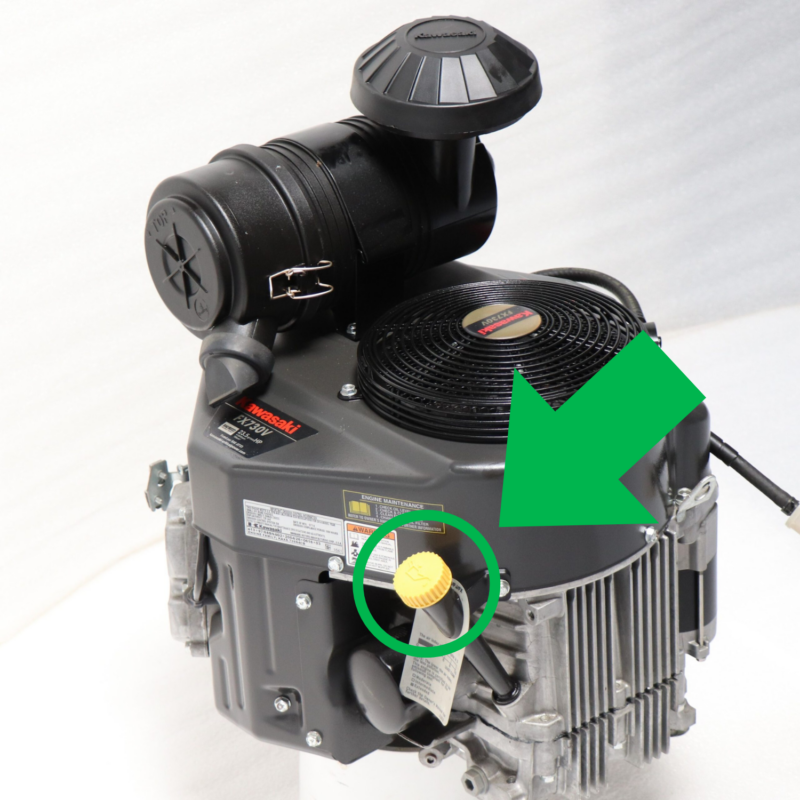
Once you’re ready to begin, you’ll start by removing the engine’s oil dipstick. Then, wipe off the oil filler neck with a paper towel or an old rag so it’s clear of grass clippings, dirt, dust, and other debris. After this area is clean, you can move on to your selected method.
Using an Oil Extractor Kit
If you’re using an oil extractor kit, always double-check its instructions. In general, many oil extractor kits start with placing the end of the oil extractor tube through the oil filler neck. You’ll then push the tube down to the bottom of the reservoir and use the extractor kit’s pump to empty out the old oil. Once the old oil has been extracted, remove the tube. You can keep the old oil inside the extractor container when you take it for recycling.
Using a Drain Pan & Gravity
Without an extractor kit, you’ll need to use gravity to drain the old oil into a drain pan. If you need to prop up your mower to do this, you can do so with cinder blocks. When you’re done, you can transport the old oil to a recycling center in an enclosed or lidded drain pan.
Adding New Oil
When you add new oil to your engine, you don’t want to overfill it. Adding too much oil can permanently damage your engine, causing issues like sputtering, stalling, and overheating. For this step, begin by slowly pouring the new oil through the oil filler neck. You can use a funnel if you’d like; however, make sure the funnel has not been used for any liquids other than oil. After you’ve poured in about half the bottle, stop and check the oil level.
Checking the Oil Level
To check the oil level, first wipe off the oil dipstick. Then, re-insert the dipstick back through the oil filler neck. Make sure the dipstick goes the whole way in, including screwing the top if the oil filler neck has a screw-top. Once this is done, pull the dipstick back out and check the levels.
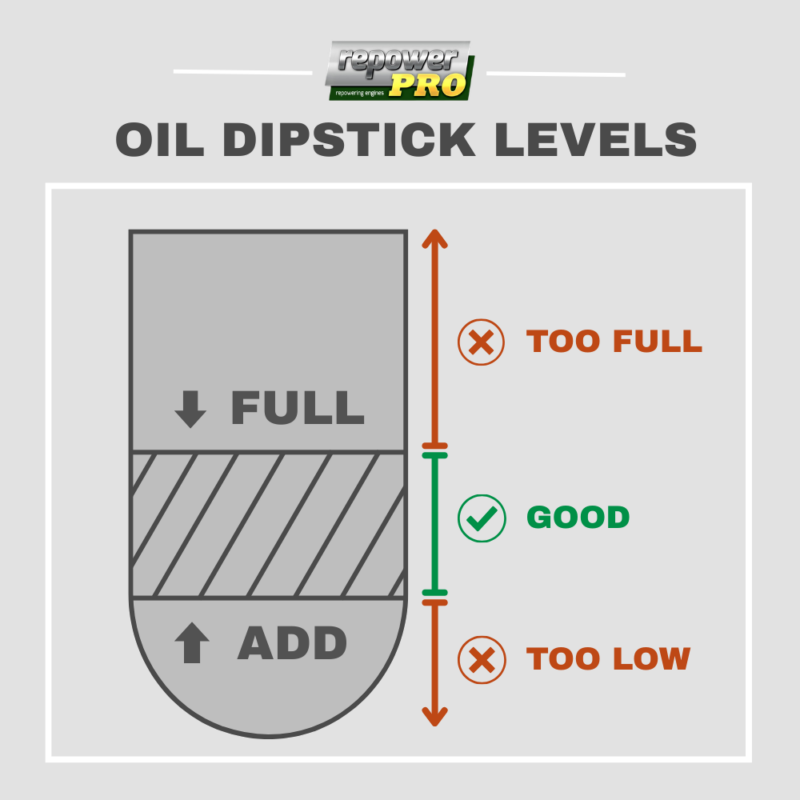
Near the bottom of the dipstick, you’ll notice two markers. The marker or line closest to the bottom of the dipstick represents a low oil level. The marker or line that’s higher up shows the maximum fill line. When adding new oil to your engine, you want the oil line to end between these two markers. You don’t want to surpass the full line. Once you see that the oil level falls in the good range, you’re done! You can secure the oil dipstick back in its spot and clean up your workspace.
Recycling the Old Oil
Now that you’ve changed the oil in your mower, the last step is to recycle the old oil. Oil must be safely and legally discarded. You cannot casually throw away or dump oil. Instead, you’ll need to transport the old oil to a recycling facility.
Oil Storage & Transportation
You can transport the old oil in a lidded oil drain pan or extractor kit. If you move the oil to another container, the container that you choose should never have been used for any other liquids, including water, as you can’t recycle oil that’s been mixed with anything.
Old oil can be stored in a cool, dry place until you are able to transport it for recycling. However, you should always make sure any oil is securely contained and not within reach of animals and children.
Find a Recycling Center
Finding a recycling facility that accepts used oil is easier than it sounds. Many auto stores like AutoZone, Jiffy Lube, Advance Auto Parts, and O’Reilly Auto Parts provide oil recycling across the United States. Websites like RecycleSearch and Recycle Nation help you locate nearby recycling facilities for all types of items, including used oil. You can also find more information on your local oil disposal rules and locations by contacting your county’s solid waste management authority or visiting their website.
High-Quality Small Engine Rebuilds & Parts
Having trouble with your lawn mower’s engine? At Repower Pros, we stock reliable small engines and parts that bring your equipment back to life without breaking your budget. We have a large online selection of engine rebuild kits and parts that are compatible with popular brands like John Deere, Briggs & Stratton, Honda, Kawasaki, Wisconsin, and more.
Our affordable rebuild kits come with everything you need for installation, including hardware, adapters, written instructions with pictures, and expert customer service if you get stuck. Find deals on genuine and aftermarket parts, buy online, and get your order shipped right to you. Check out what’s in stock online or give us a call at 717-455-3586.